
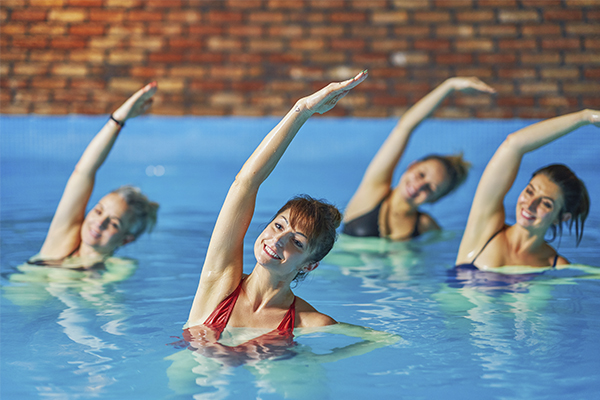
Water aerobics, also known as aquarobics, aquafitness, or hydroaerobics, involves performing aerobic exercises in an aquatic environment, most often in a pool. This discipline is unique in that most movements are performed vertically, usually at chest depth or deeper. Water aerobics is a unique form of physical activity that successfully combines cardio training, strength exercises, and elements of rehabilitation therapy. Classes are usually held in a group format under the guidance of a qualified instructor, accompanied by music, last about an hour, and focus on increasing endurance and muscle strength. This combination makes water aerobics one of the most inclusive and safe forms of fitness available to people of all ages and fitness levels.
The Difference Between Water Aerobics and Land-Based Fitness
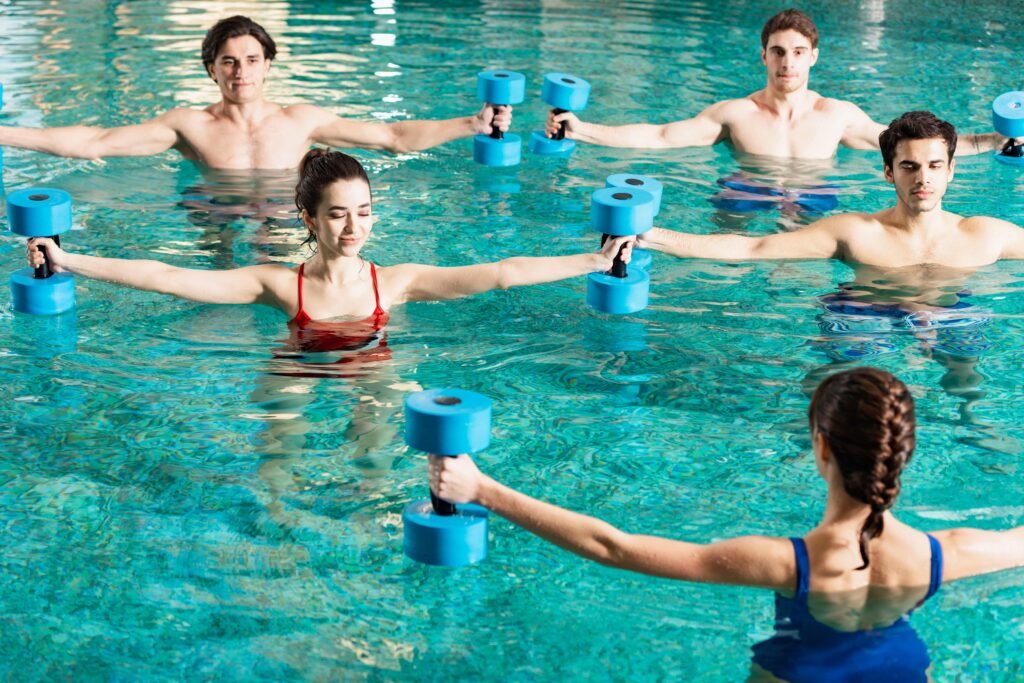 One of the main goals of water aerobics, as with land-based exercise, is to train the cardiovascular system. But water aerobics has two fundamental differences due to the physical properties of water: water resistance and buoyancy.
Water provides natural resistance, which is significantly higher than air resistance. Every movement of the body in water creates resistance that activates opposing muscle groups simultaneously. This turns aerobic exercise into strength training as well, providing a balanced workout that is not always achieved during traditional land-based classes. The buoyancy of water reduces the gravitational load on the body, making exercises low-impact or even non-impact. This minimizes stress on the spine, hips, knees, and ankles. This feature is critically important for people with joint problems, osteoporosis, arthritis, or excess weight. Water also provides constant cooling for the body. This prevents overheating, makes training more comfortable, especially for older people, and allows you to train longer without feeling exhausted from the heat or intense sweating.
Physical and Therapeutic Benefits of Water Aerobics
Regular water aerobics classes offer a wide range of benefits that improve overall health and quality of life.
- Benefits for joints and bones: As mentioned above, due to the reduced gravitational impact, water aerobics is the safest form of exercise for people with arthritis and weak joints. It allows you to strengthen the muscles that support your joints without aggravating inflammation.
- Cardiovascular health: After regular exercise, aqua aerobics helps lower blood pressure and resting heart rate, which are key indicators of overall cardiovascular health improvement.
- Strength training: Water resistance provides an even load on the muscles during forward and backward movements. This activates opposing muscle groups, promoting more balanced muscle growth.
- Recovery and rehabilitation: Historically, the benefits of water exercise have been used for injury therapy long before aqua aerobics emerged as a fitness class. The aquatic environment is stable and supportive, helping people with balance issues and limited movement control recover from injuries or surgeries.
Social and Psychological Comfort
In addition to the physical benefits, aqua aerobics offers significant social and psychological bonuses. Group classes create a pleasant, supportive atmosphere with musical accompaniment, which increases motivation and makes the training process more enjoyable. In addition, the cooling effect of water eliminates one of the most common discomforts of land-based fitness – excessive sweating and overheating. This allows participants to feel comfortable and focus solely on performing the exercises.
Various Forms of Water Aerobics
- Aqua Yoga: Combines slow, controlled yoga movements with water resistance to improve flexibility and balance.
- Aqua Jogging: Performed in deep water where the feet do not touch the bottom. Floating aids are often used. This provides a high-intensity but completely low-impact workout, which is especially beneficial for runners recovering from injuries.
- Aqua Zumba: Combines Zumba dance moves with water, making the workout extremely fun and social while effectively burning calories.
- Aqua biking: Pedaling on special underwater bikes for an intense lower-body workout that also promotes lymphatic drainage.
Positive Health Effects
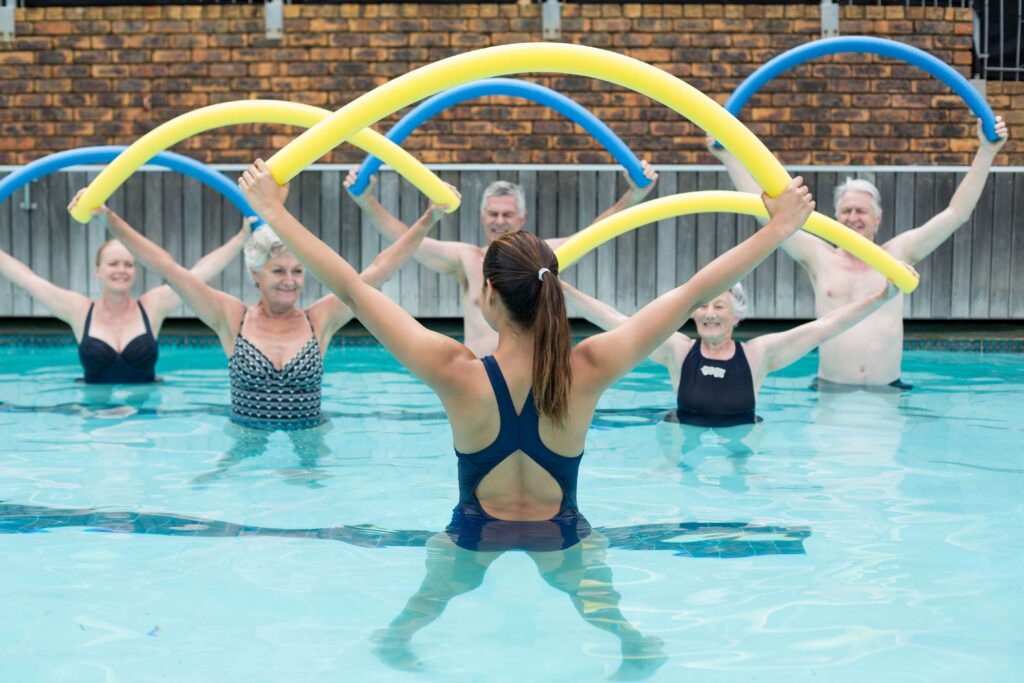
The overall impact of water aerobics on health, including improvements in aerobic capacity, muscular endurance, and overall quality of life, is extremely positive, as confirmed by studies conducted even on elderly people with obesity. Water provides a safe and effective environment for exercises that would otherwise be too strenuous. Water aerobics is a proven method for incorporating aerobic exercise and muscle strengthening into your activity schedule. It provides a balanced workout by activating all major muscle groups. Due to its low-impact nature and ability to reduce lactic acid buildup, aqua aerobics not only improves overall health but also serves as an ideal tool for injury prevention and active rehabilitation. For a wide audience, from athletes to seniors who want to stay in shape without harming their joints, water aerobics remains one of the most valuable and enjoyable forms of physical activity.
Comments are closed